Peace of mind in exhibition spaces. Non-contact intrusion and proximity detection system.
In the protection of artworks and cultural properties, in addition to preventing theft and vandalism, the most important aspect is to safeguard the works without causing damage. While there is a demand for monitoring that does not involve touching the artworks, the installation and operation of cameras can often be challenging due to privacy considerations and installation constraints. Furthermore, there is a need to reliably detect intrusions or approaches during nighttime or after hours, as well as to quickly identify signs of not only theft but also vandalism, damage, and removal. Against this backdrop, there is a growing demand for sensors that possess the characteristics of "not handling images," "not making contact," and "being less affected by environmental factors." As an option, the use of microwave sensors that can detect intrusions and approaches without contact is considered effective.
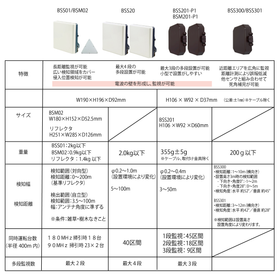
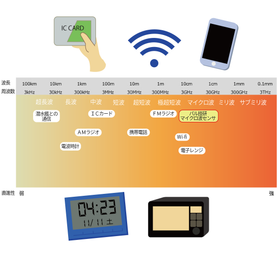
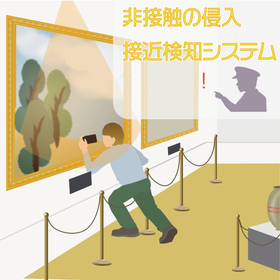
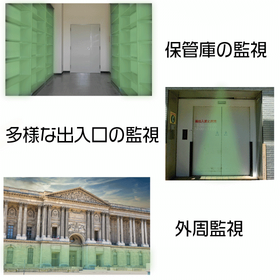
These sensors detect human movement and proximity through changes in radio wave reflection and can operate stably even in dark environments. They can detect behaviors such as "reaching out to the exhibit," "crossing the rope," or "being too close" and provide immediate notifications. They serve as an additional detection layer that complements existing security systems, contributing to deterrence and early response. They are also effective in enhancing security around exhibition rooms, storage areas, and various entrances and the periphery of buildings.



![Microwave Sensor [Non-Automotive Application Examples]](https://image.mono.ipros.com/public/product/image/254/2000572237/IPROS75586717342588780519.png?w=280&h=280)


![Microwave Sensor [Examples of Use in Automobiles]](https://image.mono.ipros.com/public/product/image/e62/2000572233/IPROS63545245611644449465.png?w=280&h=280)


